Best road bikes under £1,000

Trek 1.5

Buying a road bike for under £1,000 is a competitive market segment, with numerous companies offering several models each. It is impossible to review anything close to all of them — and to some extent you don’t need to, because many bikes in this bracket are quite similar. It is hard to find huge variances in quality and spec at a given price.

The more useful questions are: where is the best place to buy a bike? What features do I actually want? And have I left enough money for the important extras?

What £1,000 buys you in 2026

First, a reality check. Bike prices rose sharply from 2020 onwards and never fully came back down. A bike that was £700 a few years ago is comfortably £950 now, with much the same spec. £1,000 has moved from “good mid-range bike” to “solid entry-level bike”.

That said, the bikes themselves are better designed than they were. What you should expect for your money today:

  • An aluminium frame with a carbon fork. Standard, and a good combination.
  • Disc brakes. Now the default rather than a novelty — most manufacturers have stopped making rim-brake road frames at this price.
  • 28mm tyres, with clearance for 32mm. The single biggest improvement to road bikes in the last decade.
  • Shimano Claris, Sora or Tiagra. 105 has largely priced itself out of this bracket.
  • Mudguard and rack mounts on most endurance-oriented models.
  • Cheap wheels and tyres. This is where manufacturers save money to hit the price point — and where your first upgrade should go.

Which frame material?

Steel, aluminium, carbon fibre or even titanium? At this price the answer is almost always aluminium, and you should be happy about it.

Carbon fibre has effectively disappeared under £1,000 for new bikes. There was a window a few years ago when Ribble and Boardman were squeezing carbon frames in just under the line, but rising prices have closed it. In any case, it is not just the material but how it is put together. A cheap carbon frame is not better than a well-made aluminium one, and to get carbon under £1,000 something else has to give.

Aluminium is popular in this bracket because it is cheap, strong and easy to mass produce. The old complaint was a harsher ride — you notice more potholes — but modern butted aluminium tubing and wider tyres have largely solved this. Look for a frame with double or triple-butted tubes, which are lighter and ride better than plain gauge.

Aluminium has one underrated practical advantage: the odd dent doesn’t write the frame off. With carbon, an impact can finish the frame, and the damage is not always visible.

Race geometry or endurance geometry?

This used to be framed as “sportive vs road bike”. The terminology has settled on endurance versus race, but the distinction is the same.

An endurance bike has a taller head tube, giving a more upright and comfortable position. Race geometry puts you lower — more aerodynamic, less comfortable. Endurance frames also tend to be slightly less stiff, absorbing more vibration, and come with compact chainsets (50/34) rather than bigger gears like 53/39.

The difference is not huge, and almost everything under £1,000 now leans towards endurance geometry. If you genuinely intend to race, look specifically for the handful of race-geometry frames still sold at this price — the Specialized Allez and Cannondale CAAD Optimo being the obvious ones.

Groupsets for bikes under £1,000

The groupset ladder has shifted downwards since this article was first written, because Shimano 105 moved to 12-speed and took a price rise with it. The current road hierarchy, cheapest first:

  • Shimano Claris — 8-speed, entry level, now available with mechanical discs
  • Shimano Sora — 9-speed, the most common fitment around £700–£850
  • Shimano Tiagra — 10-speed, the sweet spot, usually £850–£1,000
  • Shimano 105 — 11 or 12-speed, rare at this price and usually only as a partial groupset
  • Ultegra and Dura-Ace — 12-speed electronic only, well out of scope here

More sprockets means smaller jumps between gears. That is genuinely nicer to ride, but it is a refinement rather than a performance gain — Claris will get you up the same hills as Dura-Ace.

You will also see more non-Shimano kit than you used to, with microSHIFT and SRAM Apex both appearing at this price. Both work perfectly well; don’t dismiss a bike for the badge on the mech.

On brakes: at this price you often get cable-actuated (mechanical) discs rather than full hydraulics, and cheap cable discs are not obviously better than good rim brakes. Look for either full hydraulics or a hybrid cable/hydraulic caliper such as TRP’s HY/RD.

One last point on groupsets: buying these components separately costs more than the complete bike they come fitted to. Building up from parts is a labour of love, not a saving.

The Cycle to Work scheme

The old £1,000 limit on the Cycle to Work scheme was removed in 2019, so £1,000 is no longer the hard ceiling it once was. Your employer now sets its own limit — it may be £1,000, £2,000 or uncapped, so it is worth asking, and worth encouraging them to raise it.

Depending on your tax band, the saving is typically 25–40%. The scheme has survived several rounds of Budget speculation about reintroducing a cap, so check the current position before committing.

Best road bikes under £1,000

Prices below are a guide. This is a market with constant discounting, and last season’s model at 30% off is almost always the better buy.

Van Rysel (Triban) RC 520 — around £850
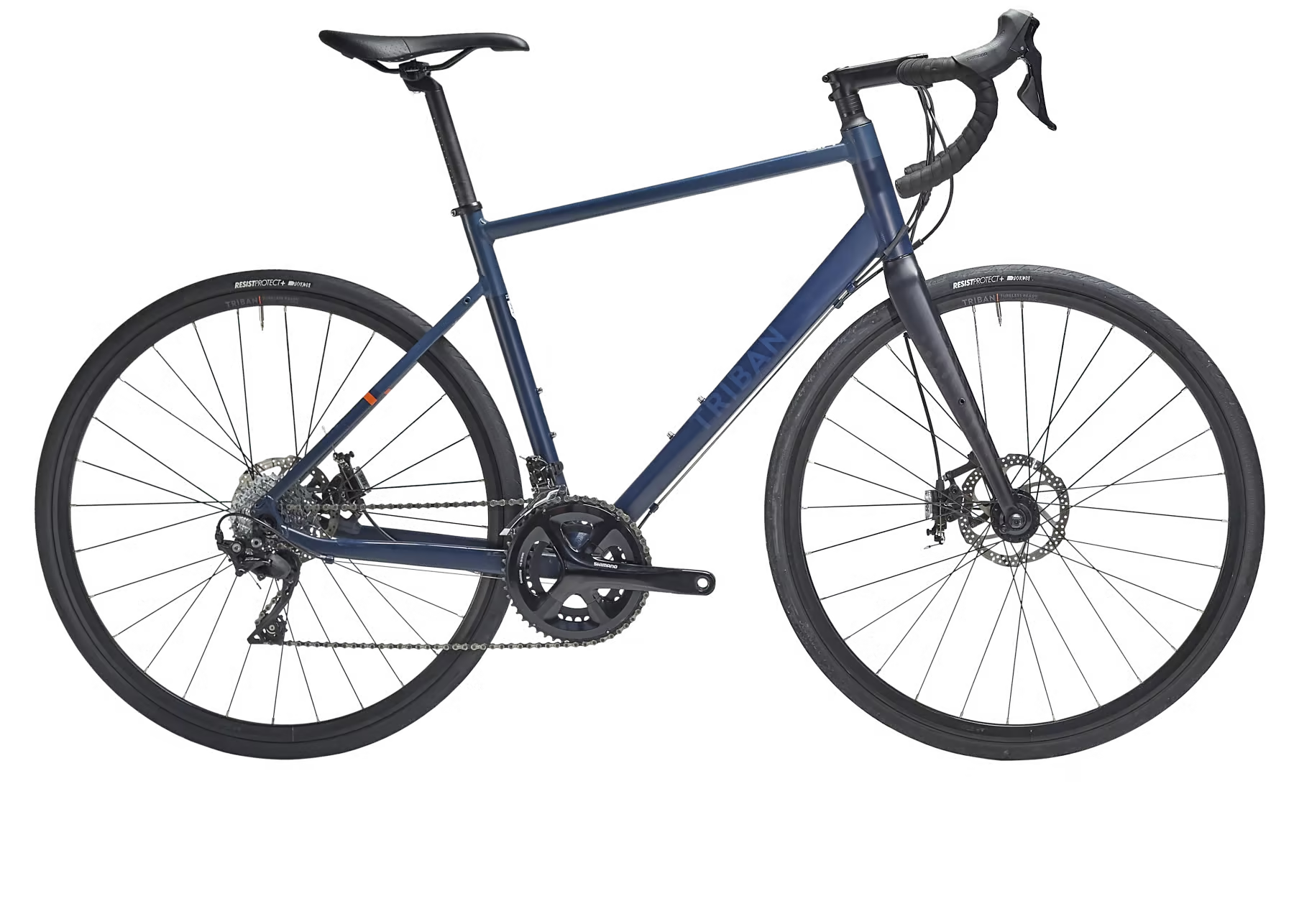
If someone asks me for one recommendation and doesn’t want a discussion, this is it. Decathlon’s RC 520 has been the default answer at this price for years. You get a comfort-oriented aluminium frame, carbon fork, most of a Shimano 105 groupset, TRP HY/RD hybrid brakes, tubeless-ready wheels and clearance for big tyres. It takes mudguards and a rack.

It is not a racing bike — tall head tube, upright position, a couple of kilos heavier than it needs to be. For commuting, sportives, winter training and light touring it is very hard to beat on value.

Boardman SLR 8.6 / 8.8 — around £550–£900
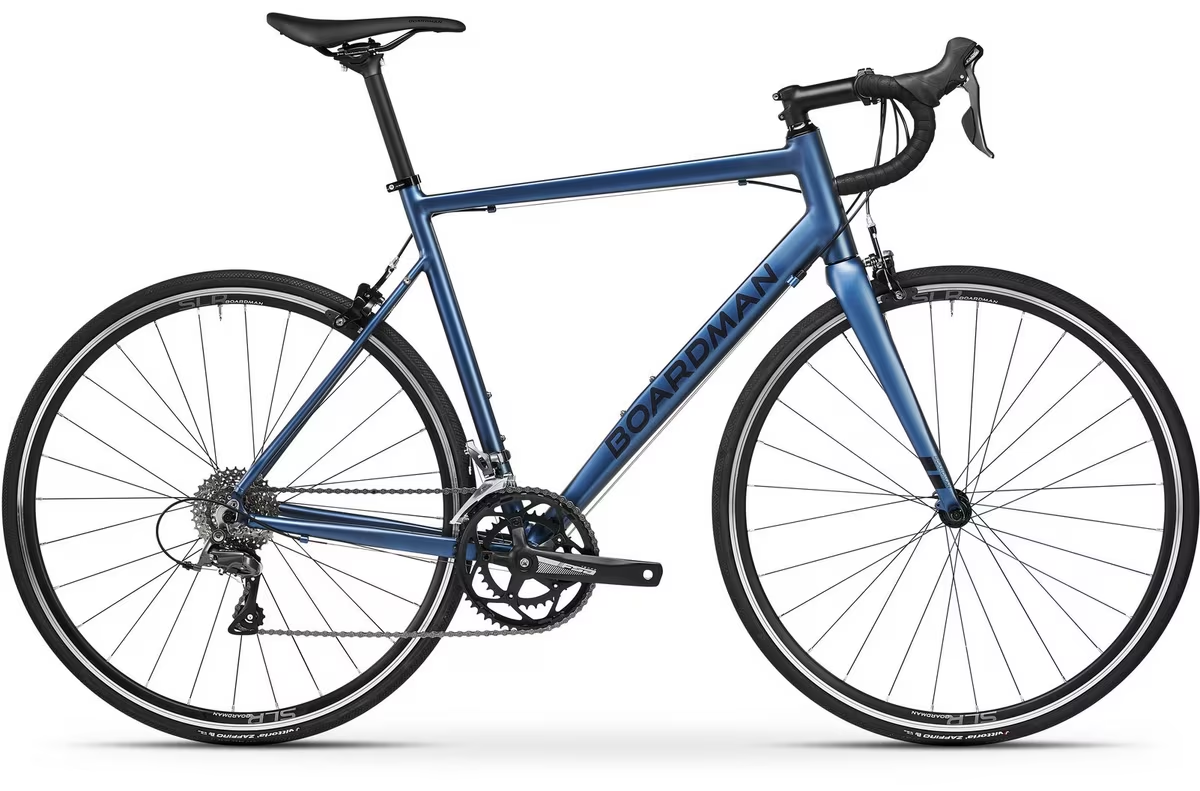
Halfords get a hard time, but the Boardman road bikes are properly good. Triple-butted aluminium, carbon fork, and a ride quality that punches well above the spec sheet. The 8.6 is the budget end (Claris, rim brakes); the 8.8 adds a better groupset and discs. Halfords will build it and service it, and there is a branch in most towns — which matters more for a first bike than people admit.

Giant Contend — around £750–£1,000

Giant make a large share of the world’s bike frames and it shows. The Contend is the all-rounder here: nippy enough to enjoy, relaxed enough for all day, with mudguard and rack mounts and room for 32mm tyres. The Contend 2 sits around £750 with Claris; the Contend 1 and AR versions take you to the top of the budget. Nothing about it is exciting and everything about it is right.

Trek Domane AL 2 — around £850

Many of my own bikes have been Trek, and the entry-level Domane is the modern equivalent of the old Trek 1000 I commuted on for years — except it now has a carbon fork, through-axles, hydraulic discs and clearance for 32mm tyres with mudguards. Endurance geometry, sensible spec, and a dealer network that will look after you. Trek also sell at the same price in shops as online, so it is worth visiting a local dealer.

Specialized Allez E5 — around £975

The Allez is still here and still the pick if you want something that feels like a race bike rather than a comfort bike. Sharper handling, lower front end, and a frame that will happily take better components as the originals wear out.

The frustration is price: the Allez has crept up considerably without much spec improvement, and you can get more kit for your money elsewhere. You are buying the frame and the handling.

Ribble Endurance AL — from around £999

Ribble are where I bought my own first sub-£1,000 bike, and their bike builder remains the most interesting thing in this bracket: you choose groupset, wheels, finishing kit and paint rather than taking whatever the spec sheet says. The Endurance AL starts around £999 with Tiagra and cable discs, and a modest top-up gets full hydraulics. Worth configuring a couple of builds just to see where your money goes furthest.

Cannondale CAAD Optimo — around £1,000–£1,300

The descendant of the CAAD8 and still one of the best aluminium race frames anyone makes. Current models have drifted slightly above £1,000, but entry-level versions appear in sales regularly. If you want genuine racing geometry on a frame you will not outgrow, this is the one to watch for.

Merida Scultura 200 — around £945

Underrated in Britain because Merida don’t market heavily here, but the frame is excellent and massively upgradable. The fastest-feeling bike on this list for the money, and a good shout if you intend to ride with a club rather than commute.

Also worth a look

  • Pinnacle Laterite (Evans own-brand) — frequently heavily discounted
  • Canyon Endurace AL — hovers either side of £1,000, generous spec, direct-to-consumer
  • Genesis CDA — alloy version of the Croix de Fer; the pick for mudguards, rack and all-weather commuting
  • Sonder Camino (Alpkit) — if you are tempted by gravel rather than road

Spec comparison

Bike Guide price Groupset Brakes Best for
Van Rysel RC 520 £850 Shimano 105 (partial) Hybrid cable/hydraulic disc Best all-round value
Boardman SLR 8.6 £550 Shimano Claris Rim Tightest budget
Boardman SLR 8.8 £900 Shimano Sora / Tiagra Disc High street convenience
Giant Contend 2 £750 Shimano Claris Rim / disc Light, versatile all-rounder
Trek Domane AL 2 £850 Shimano Claris Hydraulic disc First road bike with dealer support
Specialized Allez E5 £975 Shimano Claris / Sora Rim / disc Race feel, upgradable frame
Ribble Endurance AL £999+ Shimano Tiagra (configurable) Cable or hydraulic disc Custom build, winter training
Merida Scultura 200 £945 Shimano Sora / Tiagra Disc Fast riding, club runs

My own sub-£1,000 bikes

Some perspective from the bikes I have actually owned at this price.

The Ribble. I bought this over ten years ago through the Ribble bike builder — aluminium frame, carbon fork, Shimano 105, custom paint job, around £900 all in. I raced on it for a few seasons and it has since become my winter training bike. The whole groupset has worn out several times over, but I am still on the original frame and fork. The paint on the carbon fork has started to peel, though carbon is inert and won’t rust.

Over 50,000 miles on that bike. Not bad for £900, and it is the reason I tell people not to hold out for a top-end bike. If you get into cycling, your £1,000 road bike becomes the perfect winter trainer.

bike-commuting

The Trek. My commuting bike was an old Trek 1000 — aluminium frame and aluminium fork, which meant feeling every pothole on Oxford’s roads. It kept going for well over fifteen years and was quick for a commuter. The modern equivalent gets a carbon fork, which is a real upgrade.

The Specialized Allez. I bought one in the US for training over there. After riding an expensive Trek Madone it was a bit of a come-down, but it remained very good value. A friend bought one more recently and is perfectly happy with it.

Should you buy second-hand instead?

This is the biggest change in the advice I would now give. Because new prices rose so steeply, the second-hand market is unusually strong. £1,000 used will buy a carbon-framed bike with 105 or Ultegra that cost £2,500 new — a considerably better bike than anything new at this price.

The trade-offs are real: no warranty, no dealer, no free first service, and you need to know what you are looking at. With carbon in particular, inspect the frame carefully around the bottom bracket, head tube and any chipped paint, because impact damage is not always visible. With any used bike, budget £150–£200 for a chain, cassette, tyres and cables, which are almost always worn.

My rule of thumb: if this is your first road bike, buy new from a shop that will look after you. If it is your second, buy used and get far more bike.

Leave money for the extras

This is the mistake I see most often. The bike is not the whole cost. Before you spend the full £1,000, account for:

  • Pedals — most road bikes are sold without them (£30–£60), plus shoes (£60+)
  • Helmet — £40–£70 for something decent
  • Lights — non-negotiable for British winters (£50 for a usable set)
  • Mudguards — if the frame takes them, fit them; your club mates will thank you
  • Puncture kit — spare tubes, tyre levers, mini-pump, multitool (£40)
  • Bike fit — £100 at a good shop, and better value than any component upgrade

That is comfortably £300. Spending £750 on the bike and £250 on the rest will give you a better experience than spending £1,000 on the bike and riding it in trainers with no lights.

Where to spend upgrade money later

Manufacturers hit a price point by fitting cheap wheels and tyres, because that is where buyers look last. It means a £1,000 bike comes with a built-in upgrade path:

  1. Tyres first. Around £70 for a good pair, and the biggest improvement per pound you will ever make to a bike.
  2. Wheels second. A £300 wheelset will transform a £900 bike.
  3. Groupset last. Crisper shifting is a luxury, not a performance gain.

Where to buy

Direct-to-consumer brands — Decathlon, Ribble, Canyon — can undercut a traditional dealer because they skip a step in the supply chain. You pay for that with self-assembly and no local mechanic to lean on.

There is still a lot to be said for walking into a bike shop you trust and seeing what they have. If you are new to road cycling, a shop that will fit you properly and fix things for free in the first year is worth a hundred pounds of spec.

In summary

Don’t agonise over it. The bikes in this bracket are more similar than the spec sheets suggest, and the differences that matter — fit, tyre width, whether you will actually ride it — are not the ones buyers obsess over. Buy the one that fits, from somewhere that will look after you, and keep a few hundred pounds back for everything else.

And as my old Ribble shows, more than 50,000 miles later: a sub-£1,000 aluminium bike is not a compromise you will regret. If you stick with cycling and eventually buy something lighter, your first bike becomes your winter trainer, your commuter and your turbo bike — and it will probably outlast the expensive one.

Selling Up

Last September I had in mind to write a blog “I love intervals” I had just done a few intervals around Oxford. Short, small hills within the Oxford Ring Road. I even got a KOM on a hill up to a cul-de-sac in Iffley. It took 50 seconds, with an average gradient of 4% – that kind of hill. but It was really great fun to make some ‘big’ efforts.

Alas, I never got around to writing that post because, for the next few months, I paid for this tentative dip back into the hill climb world. I’ve been nursing an old injury. I think it’s an SI joint. I’ve watched a 100 YouTube videos, saying “Do this Stretch it will FIX SI PAIN” etc. but nothing seems to make any difference.  I’ve had the same issue for seven years now. I think it was separate but related to the hip impingement. I fixed the hip, but not the SI joint (lower back)

bikes-loft

So after seven years of constant effort to find a cure, you realise it’s probably not going to happen. Recently, I went up in the loft and saw three excellent bikes, which look rather forlorn. I don’t want to add up the total original cost of the three bikes sitting in the loft, but it dawns on me it is a little extravagant to keep three bikes, rarely used. I also have many lightweight wheels, which as a hill climber you tend to accumulate – Zipp 404’s and a “Lightweight front wheel – weighing around 300 grams or something ridiculous.

The problem is that they are all rim brake bikes and this makes the bikes very last millenium. I imagine the resale price of tubular rim brake wheels and rim braked bikes has plummeted. I’d like to sell, but you are resistant to sell when you need to accept a huge discount from the original bike. There’s always part of you thinks. “But, if I sell all my best bikes, I’m bound to get better and then I’ll need to buy new ones!” I have a zen-like attitude to personal possessions – I love selling on ebay or giving to charity shops, but with bikes there is a degree of attachment. Funny I have no attachment to my turbo trainer. (see below)

In 2013, the Trek Madone (the bike I used in 2013 National HC) was I believe top of the range, but now manual shifting and rim brakes – show how quickly the bike industry has moved on. The bike industry are very good at creating the old adage “There’s always a better bike to buy!”

Kirkstone Pass 2023

When I was racing, my dream hill for the national hill climb was Kirkstone Pass, the Struggle. Mainly for selfish reasons, it would have been an ideal hill for me. But, it was great to see the event as strong as ever held on closed roads on Kirkstone Pass in 2023.

Turbo Trainers

turbo-garage

Remember the days of spending 30 minutes on a turbo in the garage? I never tried the modern-day video game versions. People seem to spend much longer on Zwift and the like. I always found turbo trainers intensely boring and time moved slowly. You had to be super-motivated to do 30 minutes or even an hour. Does anyone still use static turbo trainers? I tried to sell it on gumtree for £5, but I got no takers, so now I’m giving it away for free.

The Trek Madonne is theoretically a deluxe winter training bike. The problem is I never do any winter training these days.

bike-commuting

The irony is that I have three great bikes, but I spend all my time on an old winter hack, which I’ve had for getting on 25 years. I’m tempted to consider a disk-brake commuting bike to see what all the fuss is. But, whenever I think of buying a new commuting bike – I’m always stuck in that conundrum, taht given the risk of bike theft in the centre of Oxford – why chance it with a better bike?

Also, I’m selling my Scicon Travel bag. It’s very good. You can read the review here

It’s available on Gumtree here. £90 ONO

bike-path3

It’s not all doom and gloom, I still really enjoy cycling 10-15 miles a day around Oxford – there is a wonderful bike path. It’s enough to keep fit and happy.


Best commuting bike under £500

electra-loft-7d-2016-womens-hybrid-bike-yellow-EV262778-1000-1

For £500, you can get a pretty decent commuting bike. Personally, I wouldn’t be keen to spend much more than £500 for a commuting bike. If you lock the bike up in town, there is an increased chance of theft, so with just a £500, you get more peace of mind than you would if you had spent over a £1,000.

I bought a very nice commuting bike in 1999 for about £550 (It was a Trek) but it got stolen from the back of my house. I bought a second hand bike (Trek 1000) from a neighbour for £200 as a temporary stop gap. 17 years later, I’m still riding this temporary stopgap. It is essentially an aluminium road bike, adapted for commuting. I often check out alternative commuting bikes and have test ridden a few, partly for this blog, partly for interest in ‘upgrading’ my commuting bike.

There is a great choice of commuting bikes for under £500. I would separate the choices into:

tl
The most common bike is variations on the hybrid – cross between MTB and road bike, giving maximum functionality needed for commuting.
  1. Classic / Retro Style Bikes – Look cool, great joy to have. Slower. heavier. A bit more expensive. Not great quality at less than £500.
  2. Hybrid Bikes – best value. Most practical, most widely bought. Cheap prices due to economies of scale.
  3. Mountain Bikes – Good for rough terrain like canal paths. Wider tyres are slower. FOr under £500, you won’t get a ‘real’ mountain bike, more like a hybrid geared towards the MTB range.
  4. Road Bikes – Faster, narrower tyres, more aggressive riding position, but less stable than hybrid bikes. Useful for longer commutes and those wishing to combine commuting with training.
  5. Single Speed Bikes – Easy to maintain. Look cool. More expensive (not many under £500). Not good if you have lots of hills!
  6. Foldups – Useful for those commuting by train. Limited choice for under £500. Certainly, no Bromptons come under this price range.

Read more

Pashley Sovereign review

The Pashley Sovereign is a classic style bicycle for the real bicycle lover.  Based on traditional bike design it is lovingly put together; it will appeal to those wanting to ride a bike with a strong pedigree, but not looking for a super quick bike.

pashley-princess-sovereign-hybrid-bike-black-00118765-8500-1

You might say the Pashley is the Rolls Royce of bicycles, but that wouldn’t be really correct because a Rolls is flash, ostentatious and expensive, the Pashley isn’t. The Pashley is more of a lovingly restored vintage car you’ve picked up for a few thousand. It’s not often you get the chance to get a really great vehicle and still have change from £700.

Design

Pashley have refined the art of bicycles, one glance at a Pashley and you feel it is the image of what a bicycle should be. I’m not enamoured of the over-engineered Brooks saddle complete with multiple springs catches. (though I feel it slightly sacrilegious for offering any criticism to a wonderful British product)

Read more

Buying first road bike

If you are considering getting your first road bike, ideally you would be able to spend a minimum of £400 – £500. This would be enough to get you a decent entry level bike and give you a few options. Many companies, start their ‘entry level’ road bike around this price of £500. For example, for around £400-£500 – you could buy a Specialized Allez C2, GT GTS2 bike, Boardman Sport and quite a few others.

road-bike-reynolds-501-640
My first road bike from Ellis Briggs, Shipley. It cost £270 and was about three combined birthday / Christmas presents. It was a Raleigh 501 steel frame with now obsolete Shimano RX100. By the way, I wasn’t fat as a kid – I just shoved about 3 maps down my front and a jumper in the back. The king of the Mountains jersey was absolutely my favourite.


If you can spend £1,000 then you can get quite a significant improvement on these £500 entry level bikes. The range £500-£1,000 is very competitive these days, and you can start to get carbon frames and good groupsets.

Although, you can spend several thousands of pounds on a road bike, the difference between a £1,000 bike and £4,000 bike is not that significant for an amateur who is just doing some general riding / sportives. If you are a newcomer to the sport of cycle races, your results will not be significantly better for spending an extra £4,000 – at least in the beginning.

Read more

Trek Speed Concept 9 Review

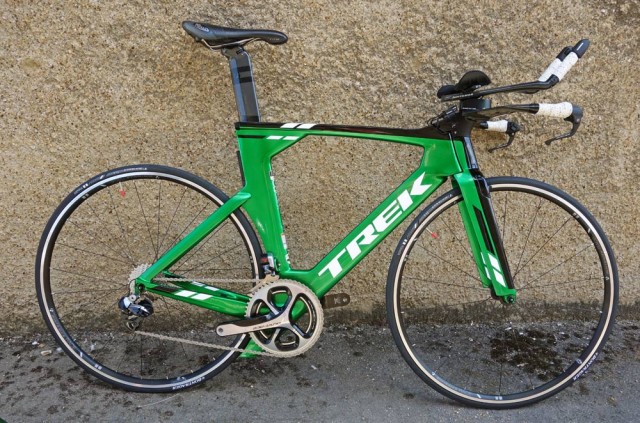
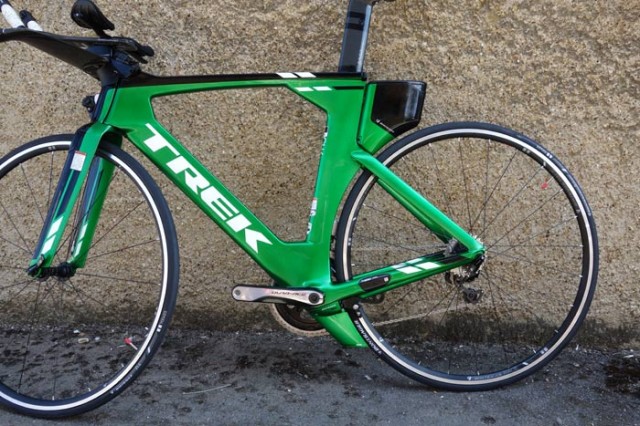
My new time trial bike (Trek Speed Concept 9) arrived at Beeline this week. Ironically, just as my time trial season is coming to an end. Anyway it looks nice. Which is the most important thing in a new bike.

trek-speed-concept-wo-db

Trek Speed Concept 9

  • 600 Series OCLV Carbon,
  • KVF (Kammtail Virtual Foil) tube shape,
  • Carbon Fork
  • Weight: frameset, cockpit setup, headset, BB and small frame parts come out to 1,874g
  • Total bike weight (with Bontrager R5 training wheels and tyres) 8.1 kg

fin-tail

Bike with draft box

 Project One

I bought the bike through Project One. You order the bike online (or through Trek dealer) and it gets delivered to bike shop. The great thing about Project One is that you can choose any combination of equipment. This enabled me to keep costs lower by choosing cheap training wheels. I also like to be able to choose the colour of the frame. You can spend quite a bit of time, switching equipment on the website

Another great thing about Project One is that it gets delivered to a good bike shop and experienced mechanics can put it together. The staff at Beeline bikes Oxford have been helpful in getting the bike on the road. Project One combines the best of the internet buying with also using a good bike shop. The best of both worlds really. Definitely adds to the experience to get a bike through a bike shop with enthusiastic workers to look after bike.

Trek Speed Concept at Project One

The main disadvantage of Project One is the time taken for bike to arrive. I ordered in  May. It arrived end of July. I kept waiting to have enough money in the bank before ordering, but if I’d known how long it would take, I could have ordered earlier.

Also, it has proved bad timing on my part. My time trial season is effectively over (I might do one 25 mile TT just to use bike). I should have waited for new model to come out in Autumn and got bike for start of 2015. When buying a bike, it’s always worth planning the best time of the year to buy it.

Clean lines on Trek Speed Concept

This is what you pay your money for. Nice neat lines, everything hidden away. Super aero.

front-brake-

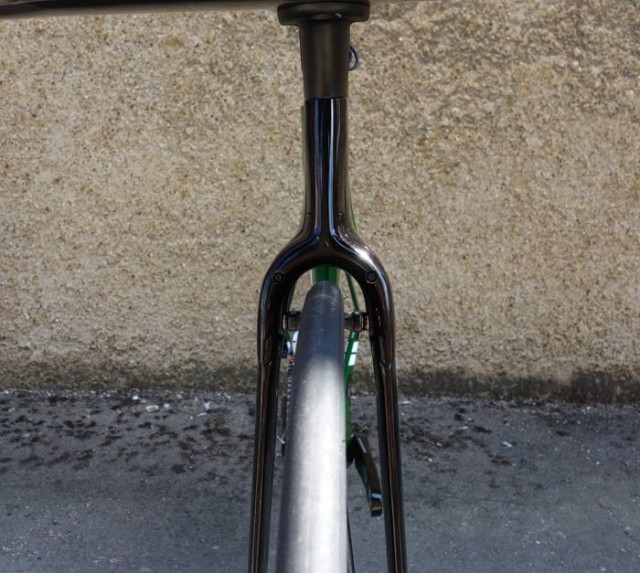
Neat front section. Really clean. Though annoyingly the plastic cover doesn’t fit 100% flush with the fork.

trek-rear-view

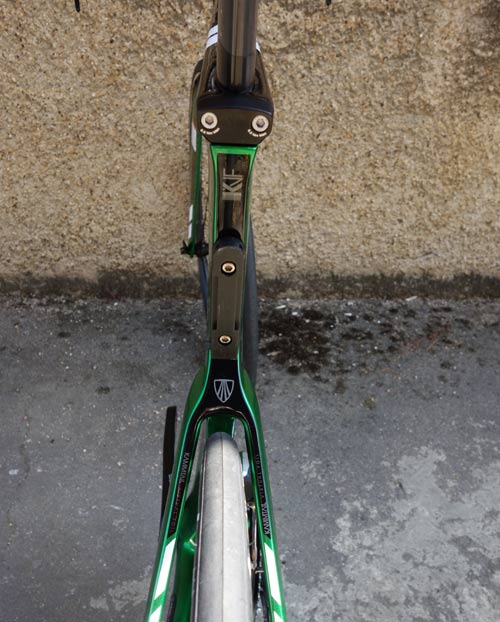
Smooth rear view (the black plastic bit for draft box can be removed) The lines of the frame are immaculate.

What’s it like to ride?

First impressions are good. Pretty stable at high speed. Seems to cut through the wind pretty well. Though disappointingly if you want to go fast, you still have to pedal very hard. It is difficult to make quantitative judgements about how much time it saves from last bike (Trek Equinox SSL) Even when I race it will be difficult. I was more impressed by the electronic gears than new frame. Electronic gears are pretty cool and easy to see the difference. Marginal aero gains, hard to judge. But, it definitely looks Aero!

Read more

Hill climb bike 2016 + Video + Photos

hill-climb-bike-2016

Firstly, an on board camera video from Courtney Blockley-Campton.

Courtney finished in a time of 2:37.5 (29th). Perhaps without on-board camera he may have finished in a time of 2.37.4. But, it captures what it is like to race up Bank Road.

You can roughly calculate time saved from weight loss

My 2016 hill climb bike

hill-climb-bike-2016
5.7 kg

This year I didn’t really get into the world of marginal gains. I even left a Shimano Ultegra derailleur on. It is about 500 grams heavier than 2015 Hill climb bike.

Read more

Ribble Winter Training Bike for sale

After 13 years of ownership, I am selling another bike – Ribble Alloy Dedacci 7003 road bike with carbon forks. Mostly Shimano 105.

ribble
Farwell Mr Ribble

I used this in my first hill climb season. 2004. I remember using it in Otley CC hill climb and Brighton Mitre, but I’ve lost the photo. 12 years is a long time in website history.

Read more

Ammaco Dresden Review

ammaco-2

Ammaco Dresden. A hybrid bike for under £170. It looks good and seems to offer tremendous value. But, as soon as you start riding it you know why it is so cheap. Yet, these cheap hybrid bikes do sell tremendously well. Many buyers just want a bike under £200, no matter what the components are like. Bicycle lovers will instinctively turn their nose up at any bike under £200. So what is it really like?

People think that a big fat saddle is going to be more comfortable to sit on. I guess the size of this saddle spreads the weight. But, it isn’t really any more comfortable to ride.

The thing with this bike is I really didn’t feel comfortable to ride more than 15mph. In fact as I was cycling along, I spent a considerable time waiting for gears to index. The back wheel was also buckled, not overly reassuring since I was testing a brand new from shop. I assume this was just very bad luck to pick the bike with a buckle in back wheel.

The brakes are fine at stopping, though you do have to squeeze pretty confidently. I guess you won’t be tearing around corners on this. However, they do look fairly flimsy and will need careful maintenance over time.

I have to say, I really quite like how it looks, at least from a distance. When you get closer, it starts to look a little cheaper, like the plastic mudguards are not going to win any prizes for style.
ammaco-1

Extensive Chain guard protection

Handlebars are adjustable in height, quite a nice touch, though I doubt the actualy buyers would be too fussy about finding optimal handlebar height. It’s the kind of bike you buy and hope to ride it straight from shop. Tyres are cheap and will offer no extra puncture protection, so be prepared for quite a few irritating punctures.

Extras.

For the price, it’s very good to see it come equipped with mudguards and panniers.

ammaco-5

Pretty good mudguards.

ammaco-5

Shimano Turney gears – I found pretty rattly. Takes time for indexing to work. May not have been set up to optimal indexing, but the front changer was pretty slow and hard work to move. Rear mech was better.

ammaco-4Looks nice. A good simple paint job

ammaco-2

To be honest some of the extras on this bike would get pretty close to £165 alone.

If I was a Car?

If the Ammaco Dresden was a car, I’d be tempted to say a Lada with a really nice paint job and roof rack attached at no extra cost.

Who would it Suit?

It would suit a student on a tight budget, absolutely unable to pay more than £200 for a bike. It might also suit someone who wanted to buy a bike for a few months when visiting a new city.

Is it Good Value?

I know this level of bike components will need more maintenance. There will be more punctures, the brakes will need careful attention and it is more likely to rust. It’s good value if you are a student buying a bike for a year or so. If you’re looking for a bike to last a decade, don’t bother.

Would I buy the Bike?

Would Ian Paisley buy a Celtic flag? I’m too much of a bike snob to buy something so cheap. Also the experience of cheap MTB has put me off spending a £150 hoping to get a good deal. What made me want to test this bike is my lodger wants a bike, but has no money. I see 100s of these Ammaco’s around Oxford and to be fair they seem to last pretty well. I guess if I was an impoverished student only wanting to cycle 2 miles a day, I might be happy to ride this. But, then I might be happy to to get a free can of Tesco Value Baked Beans.

Go on get out that student loan and blow it on a nice Pashley! – who needs beer and curry? spend all your grant on a bicycle. “You’ll never regret buying a bicycle”

Related

Charge Plug review

Charge-Plug-0-2015

Only established in 2006, Charge Bikes have carved a niche in the growing market of ‘cool’ single speed. With sleek minimalistic designs, they have proved quite popular, especially in London. They offer a range of three single speed bikes, with another three models of geared Charge Plug

Single speed

All come with Cro-mo steel frame and fork

  • Charge 0 – £329 (bullhorn bars)
  • Charge 1 – £399 (bullhorn bars
  • Charge 2 – £499 (drop track handle bars)

Geared Charge Plug

  • Charge 3 –  (disc brakes, Shimano Sora Gears)
  • Charge 4 – Shimano 105 gears (£1,099)
  • Charge 5 – SRAM Rival 22 gearing and hydraulic discs

Charge Plug 0

Charge-Plug-0-2015This is the entry level Charge Plug bike, newly released

  • Charge steel frame and fork
  • Bullhorn bars
  • Gear: 42*16
  • Caliper brakes
  • 32′ tyres
  • Charge Urban wheelset
  • Brakes: Promax RC482  Flat bar caliper levers
  • Charge Plug 0 2015 at Wiggle

At £329, it is quite a cheap introduction to single speed bikes. For simplicity and value, the Charge 0 is a reasonable start.

The Charge Plug – comes with bullhorn bars, these are a little more aerodynamic and help enable a stronger push when pedalling the single speed off from a standing start. They also help the bike stand out from the pack. However, many novices to cycling will find it easier to use horizontal bars.

Read more